Showing posts with label Shipping. Show all posts

Wednesday, August 1, 2012

Shipping as Customer Service- a confirmation

About a week ago, I shipped out a lovely copy of Japanese Wood-Block Prints, a pretty standard order.  But, as I explained in my post "Packing Books for Shipping", I was careful to give the shipment a professional look.  I added a company bookmark, wrapped the book in paper, then packed it tightly in foam, then added a personal thank you to the packing slip.  The goal here is to present an aura of professionalism and care, since this is the only interaction we have with our customers and we desire for repeat orders.

This approach was largely philosophical, without direct evidence, until I received a message today that read:
Thank you, so much, for my book.  I am delighted with the edition of "Japanese Wood-block Prints."    I had received a copy as a gift and wanted another to give as a gift.  I was particularly impressed with your packaging.  I will look for your company in the future when I am shopping for books.  Thanks Again, [Name Erased]
Thus, I re-emphasize the point that your shipping is your primary face to the customer, your one chance to impress.

Tuesday, March 20, 2012

Making your own Book Wrapping


**Always check the shipping requirements of any website you sell through to ensure you utilize their standards**

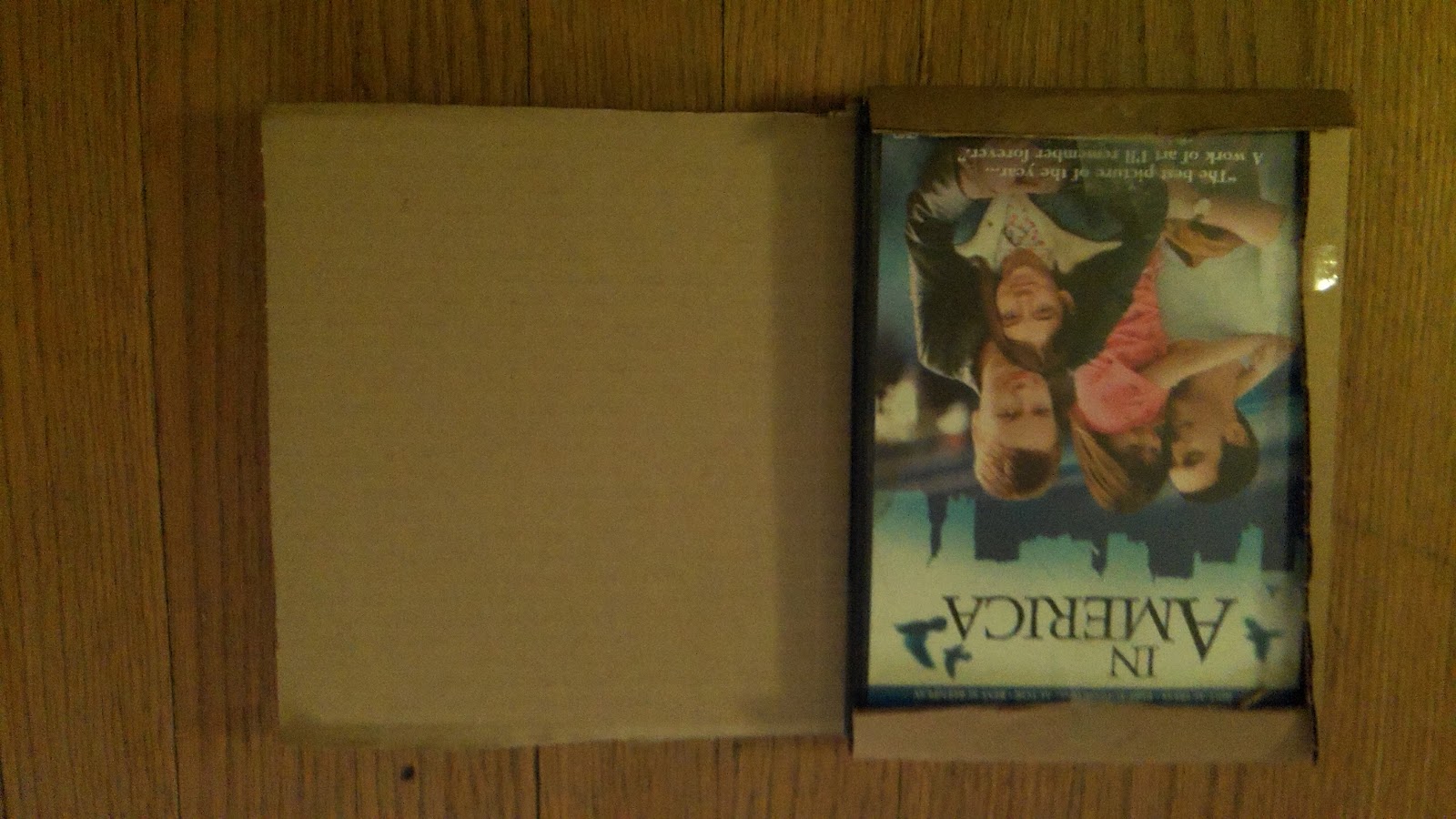
Some times, you simply don't have enough boxes, or boxes of the correct size, to ship all of your books (for more on conventional shipping, check out this post). There is an alternative manner of shipping books, which I call “wrapping” books. It involves a single large piece of cardboard, roughly 2.5x as wide as the book and 1.5x as tall.

This system of wrapping only works with tightly bound, strong books—or similar goods like DVDs in cases. Do not use it with fragile books, or those that are particularly valuable; I only use it with recently published books in excellent condition. Sometimes it helps to first wrap the book in a protective foam sheet or other protective material.

The process works like this.
  1. Lay the book or DVD out on the cardboard, roughly twice the thickness of the book from the width dimension on the right side and in the middle on the height dimension.
  2. Draw lines with a ruler along the upper, lower and right-hand sides. Make the lines a bit away from the edge of the book to give the cardboard space to be bent over.
  3. Cut out the corners as demonstrated. This creates an easily foldable flap on the right-hand side.
  4. Bend over the right hand flap—it may help to run a pen or the ruler's edge along the line to make an indentation. Replace the book and draw a line down the left-hand side of the cardboard.
  5. Cut out the top and bottom edges to create top and bottom flaps.
  6. Bend over the edges on the top, bottom and short flap. Crease the fold lines if necessary. You may want to trip the top and bottom flaps if they are particularly long.

  7. Bend over the top flap, creasing it as needed. Trim the cardboard so it does not overlap the top. Tape all of the edges.

You may wish to reinforce the corners—the weakest part of this wrapping—with an extra layer of cardboard inside.

Monday, March 19, 2012

Packing Books for Shipping


**Always check the shipping requirements of any website you sell through to ensure you utilize their standards**

The safe packing of books is a crucial technical skill for successful sales. A good package performs three roles:
  1. It ensures that your books arrive safe and sound at your destination without damages.
  2. It presents your customers with an image of professionalism which leads to more positive reviews.
  3. It is as light as possible, keeping down shipping costs
I attempt to pick up packing materials as often as possible—I avoid paying for them by asking friends and family for used boxes and picking them up from the mail department of work—in fact, the purchase of boxes can be avoided all the times if you keep your eyes out.

You want to avoid using boxes from specific products (like shoes), using only relatively plain brown boxes. This adds to the professionalism of your product. You particularly want to avoid using un-reinforced cardboard—such as is used in cereal boxes.

If the website you are using provides a shipping list, make sure you print it off and include it within the box. Also include any company-specific materials you might have (such as book marks or thank-you notes). You may want to add a personal note—such as “Hope you enjoy the book! [You Name]”--so that your customer has a personal connection to you. This builds potential for return customers and your chances of having positive reviews.

However, when employing used boxes, it is important to carefully remove all labels with shipping labels, completely black out (using a sharpie) any shipping marks (“Media Mail,” “First Class” etc). If the box is damaged at all, but you still judge it as usable, you can reinforce its corners and edges with packing tape.

You should always choose the smallest box possible that will fit your book to keep down the weight. Inside the box, you will want to add packing material as tightly as possible. Avoid using newspaper on books that might be damaged by smudging ink.

If you sell textbooks (a topic I will go over in a future post), the rules are altered. As the textbook companies are paying the shipping bills and care not a wit about how the boxes look. I save my uglier boxes for this type of shipping and utilize the heavier newspaper as packing material.

When attaching your shipping labels, make sure they are easily readable, preferably printed. This not only gives a professional presentation, but also ensures that the Post Office's computers can read them. Most websites provide labels to print off. If you are using prepaid labels from the Post Office, using the packing tape around the edges but not over the bar codes as their sensors sometimes have difficulty reading them; however, for UPS or FedEx, the companies recommend covering the prepaid labels with packing tape.

Finally, if you have a fragile object, don't hesitate to write “Do Not Bend” or “Fragile” on the outside of the box to better protect your goods.

Best of luck!